

STROM
Race Car Helmet Air Cooling and Filtering System V2
Race Car Helmet Air Cooling and Filtering System V2
SKU:99.00128
11 in stock
Couldn't load pickup availability
High powered helmet cooling system with integrated air filtering and cooling radiator.
Requires the use of a Cool Chest or Chillout Style cooler that actively cools a liquid and pumps it through the integrated radiator in our helmet system. Works exceptionally well with a Paragon Ice Chest.
Designed by racers, the STROM Sauberluft Helmet Air System was developed from the need for clean air in long endurance races. With testing and use, however, it soon developed into a unit that significantly improves the performance of a driver even in sprint racing through active cooling of inlet air and filtering of dust and hydrocarbons.
10-20% of body heat is radiated or evaporated through the head during exercise. Wearing a helmet blocks nearly all of this heat transfer and stops evaporative cooling. The SauberLuft forces air through your helmet, allowing your brain to work properly and improving the performance of your whole body. On top of that when you are breathing in cool air you are literally cooling your body from the inside. The surface area of your lungs is massive (average 75 square meters) and the heat exchange is significant. Just try breathing quickly on a cold day to realize just how much heat can be dissipated.
Features:
- Redesigned for a lighter construction and maximum air flow efficiency
- Counter-Rotating fan module with optional fan speed controller. This fan draws 5.2 amps and create 1150 PA or 0.17 psi of pressure into your helmet. Most fan systems lose all pressure when they dead head into a helmet. The positive pressure not only cools your head and evaporates sweat but it also keeps dust out.
- Integrated aluminum dual-pass radiator can use any cooled fluid (Chillout, Coolboxx, Paragon or other ice chest) to actively cool the driver's head. We consistently see air temps drop by 25F degrees from ambient and up to 40F degrees with an ice chest.
Includes:
- Selective Laser Sintered Nylon 3D parts for strength and lightness
- Counter-rotating high-powered fan
- OEM Automotive microfilters - easy to find replacement part numbers: 68233626AA or PC4302
- Aluminum radiator with barb fittings for easy connections to standard cool shirt systems
- Cage Mounting for 1.75" or 1.5" cage - comes with adapters
Optional:
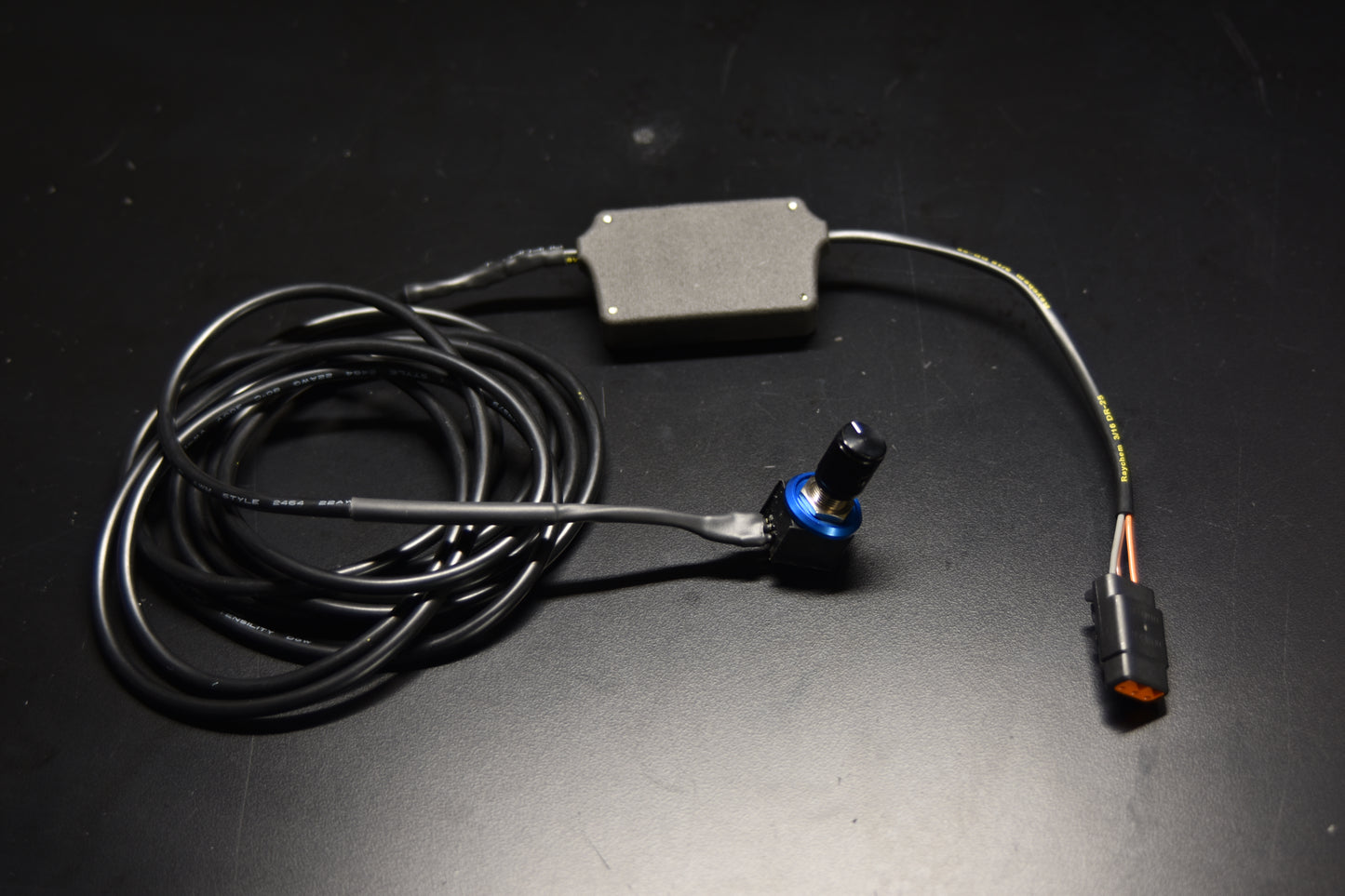
- Fan speed controller with harness for as much or as little air as you need
- Power harness with built-in fuse and ring terminals
- 4ft Fluidlogic Air Hose (comes with standard slip on helmet connection)
Installation Tips:
- Watch video in the media on this page for plumbing tips
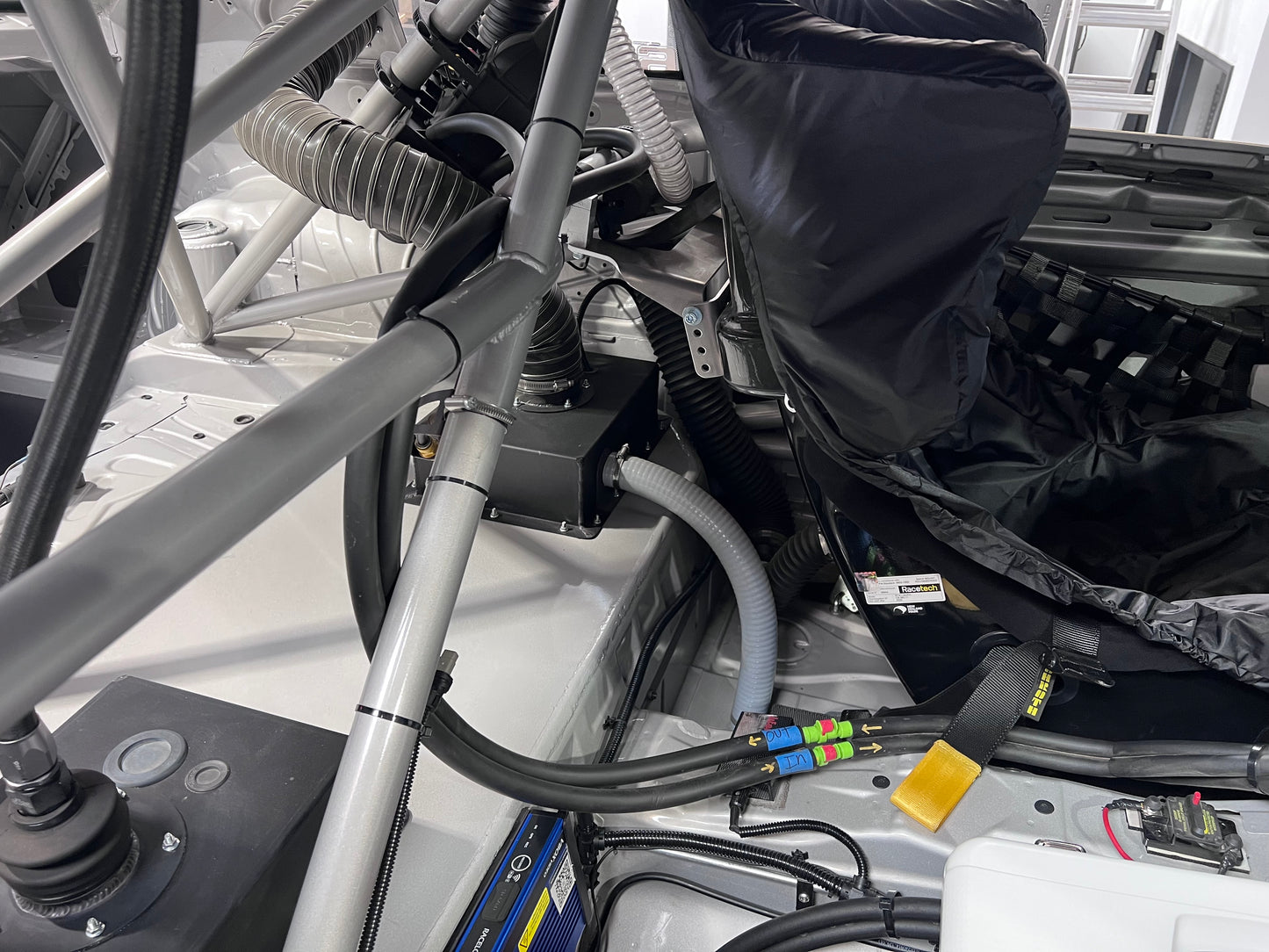
- Mount and plumb cooling lines so the radiator can bleed out trapped air - So water in on the bottom fitting and water out on the top fitting.
- Depending on type and brand of system you are using for cooling the water (Coolshirt, Paragon, Chillout, Coolboxx etc) you may need to make an adapter to a larger hose size or use a heat gun and pliers to carefully expand your tubing.
- Pay careful attention to power polarity. The unit is voltage protected with diodes but not polarity protected and you will fry the fan.
- Make sure your helmet is not squished down tight on the top of your head. Often times worn out and old crown padding will compress very easily and block all air flow into your helmet. If you don't feel air flow onto your head try lifting your helmet up slightly off your crown and if you feel good air flow at that point you likely need new padding.
- Keep the air hoses into and out of the helmet air module as short as possible. A surprising amount of heat can transfer when the inside of a race car is 140F and shorter runs keep the air from heating up before it gets to you.
- Test the routing of the helmet air hose extensively before finalizing its installation. You will need a fair bit of slack so you can look down and fully side to side. Also make sure it is ziptied up relatively high on the cage so it comes down to your head or it can catch on the seat back as you move your head around when driving.